
48-Hour Emergency Pre-Inspection — Inspection Next Week?
HUD inspection next week? We mobilize fast, assess your property, and deliver a scored deficiency report in 48 hours.
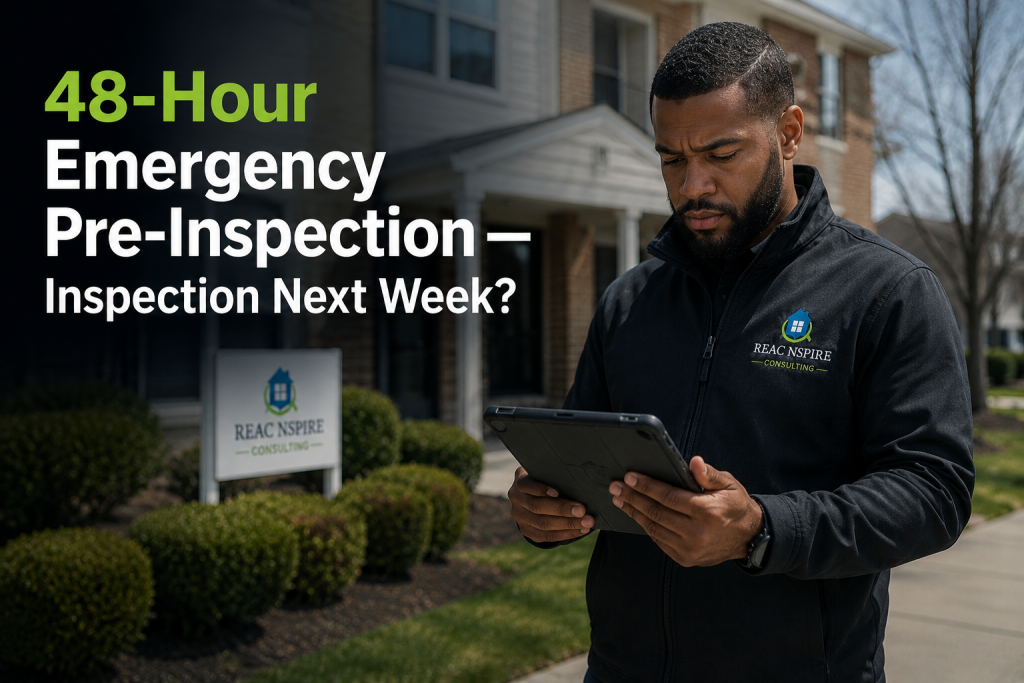
What Happens in a 48-Hour Emergency Pre-Inspection Engagement
A 48-hour emergency pre-inspection delivers a scored, prioritized deficiency report before your HUD inspection arrives.
This isn’t a general property walkthrough. It’s a structured triage engagement built around the deficiency categories and severity weights HUD’s NSPIRE inspectors use.
Here’s what makes timing matter: maintenance teams working without a score-ranked list spend their remaining days on the wrong repairs. They fix what’s visible. They fix what’s familiar. They don’t always fix what carries the most points.
The 48-hour report changes that. Your team gets a written deficiency list ranked by score impact. The highest-weighted findings go first. Every repair day from that point forward is targeted.
One week sounds short. With the right list, it’s enough to move the score.
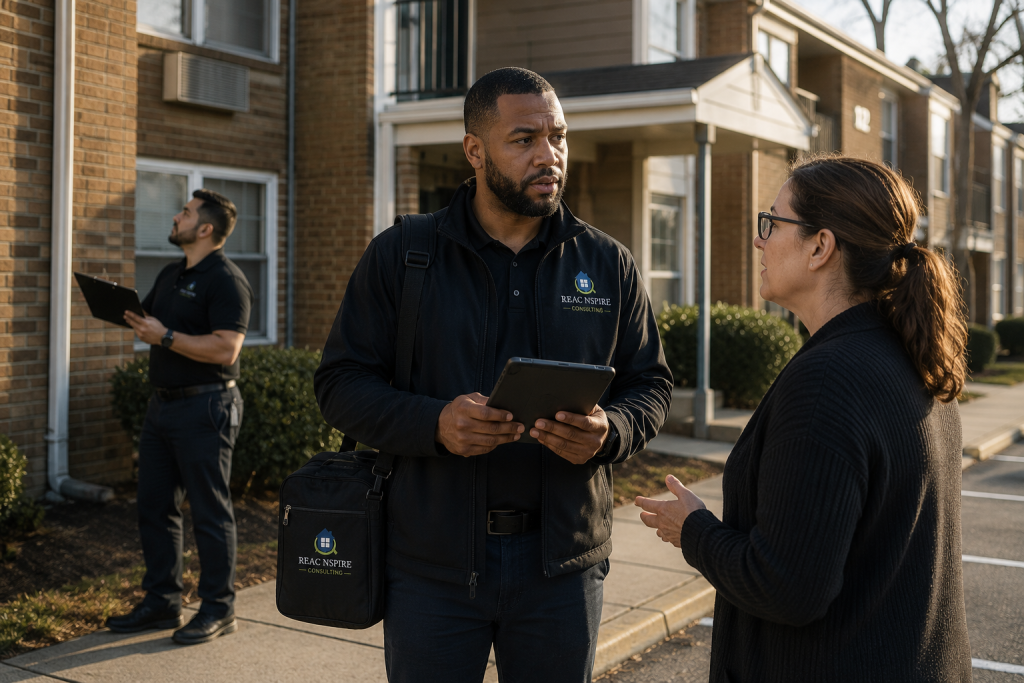
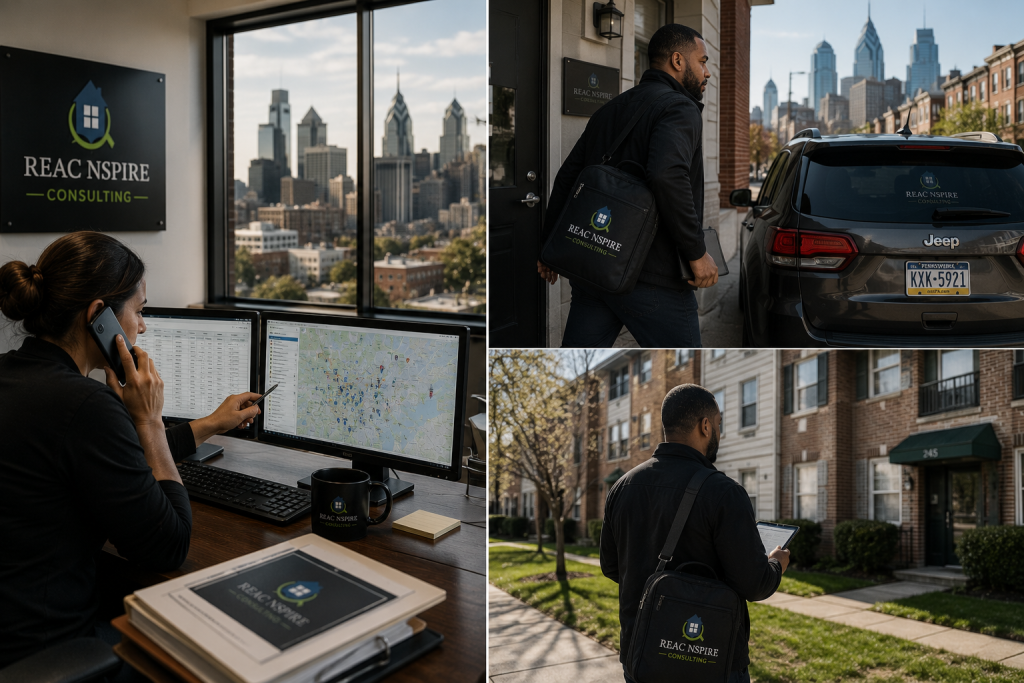
Northeast and Mid-Atlantic Properties Reached the Same Day From Philadelphia
Properties across the Northeast corridor can receive a same-day mobilization response from REAC Nspire Pros’ Philadelphia dispatch hub.
New Jersey, Delaware, Maryland, Pennsylvania, New York — all within rapid-deployment range from our Philadelphia base. For properties in those states, we can often schedule the on-site assessment the same day you call.
For properties outside the Northeast, our 50+ consultant network covers every U.S. state. The 48-hour report commitment — from completed on-site assessment to report delivery — extends nationwide.
Geography matters less than scheduling speed. A confirmed booking and a clear property contact get the assessment started. The report follows within 48 hours of the completed walkthrough, regardless of state.
Flat-rate pricing applies everywhere. No distance surcharges. No regional exceptions.

Sam Amoyelle
Founder, REAC Nspire Pros
What our work looks like.
From on-site assessment through written report delivery — every engagement runs on the same documented standard.
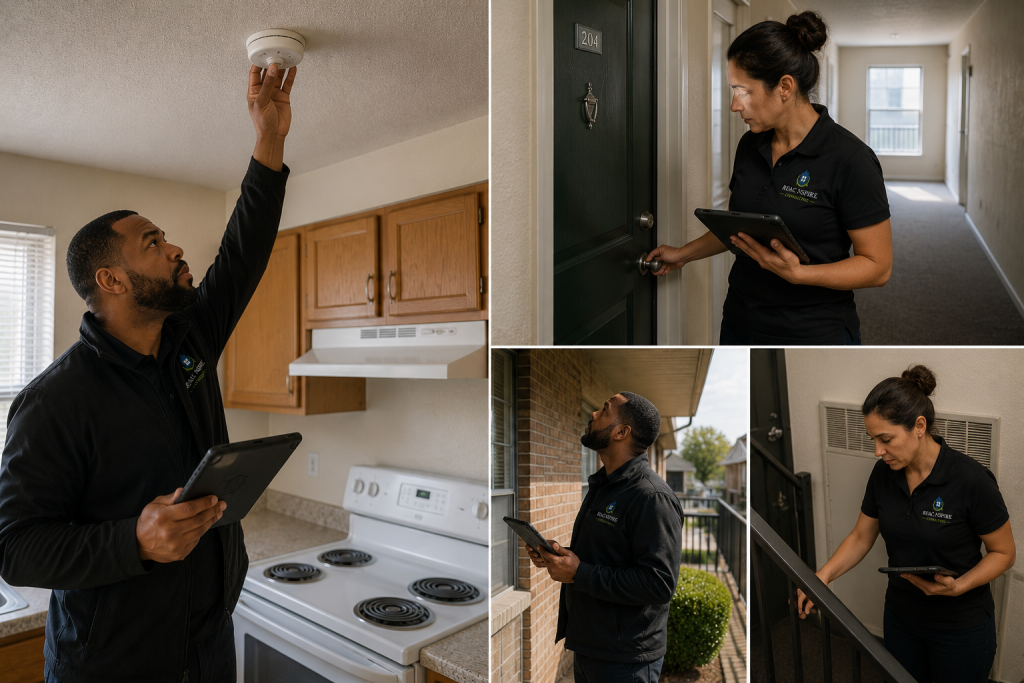
On-Site Walkthrough
Every inspectable area covered using HUD’s NSPIRE deficiency protocol — same lens your inspector applies.
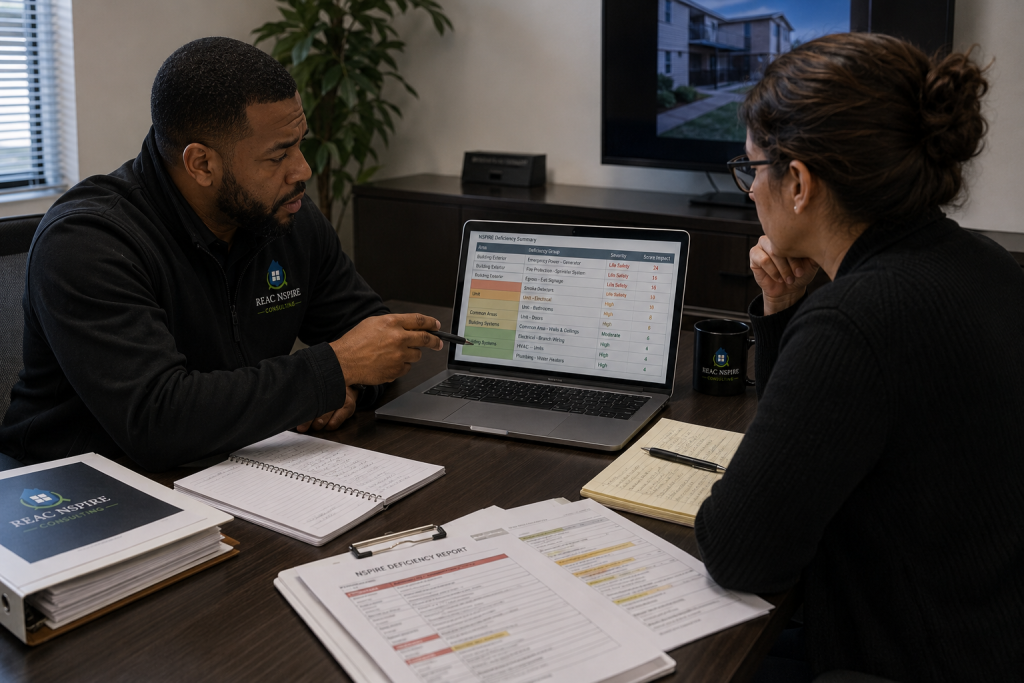
Scored Report
Findings ranked by score impact. Your team sees what carries the most points before day one.
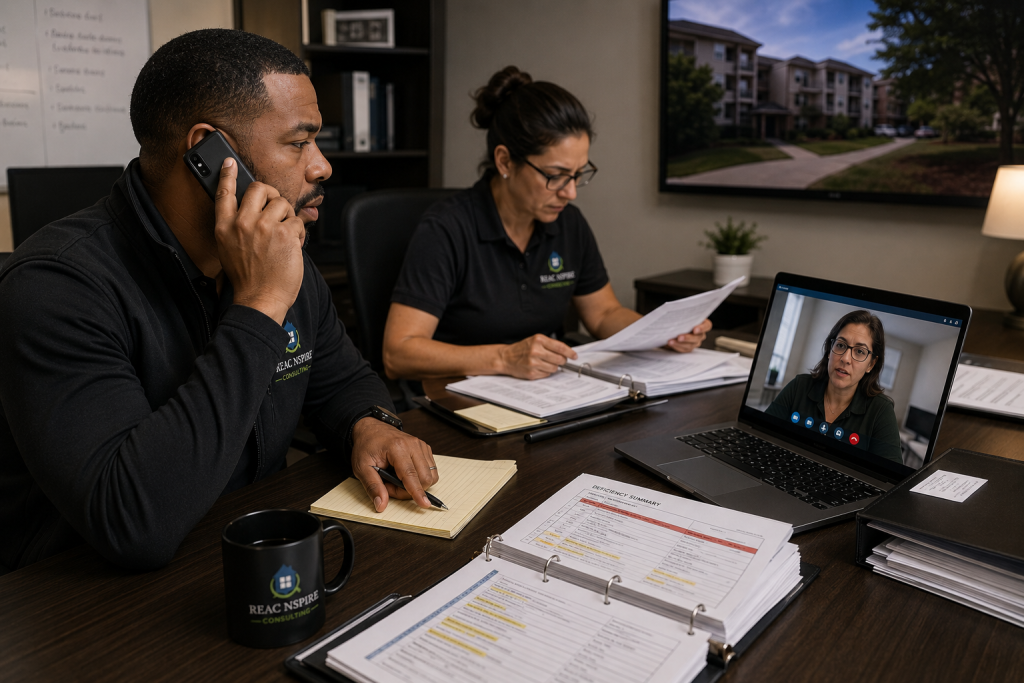
Follow-Up Support
Engagement continues through your inspection date. Questions answered. Documentation guided.
Even One Week of Targeted Remediation Moves the Score When the Fixes Are Right
Score-impact sequencing — ordering repairs by the point value each deficiency carries — is what makes a short remediation window effective.
A week of sequenced work, starting from finding number one on a scored list, addresses the deficiencies that matter most before the inspector arrives.
The report does that sequencing for you. Your maintenance team doesn’t need to interpret severity levels or estimate point values. The list is already ranked. Day one starts with the highest-weight item.
Exigent Health and Safety (EHS) findings — conditions HUD classifies as requiring immediate correction — appear at the top. Life-safety items follow. Major findings come next.
This sequencing is standard across every engagement we run. It applies whether you have seven days or fourteen.
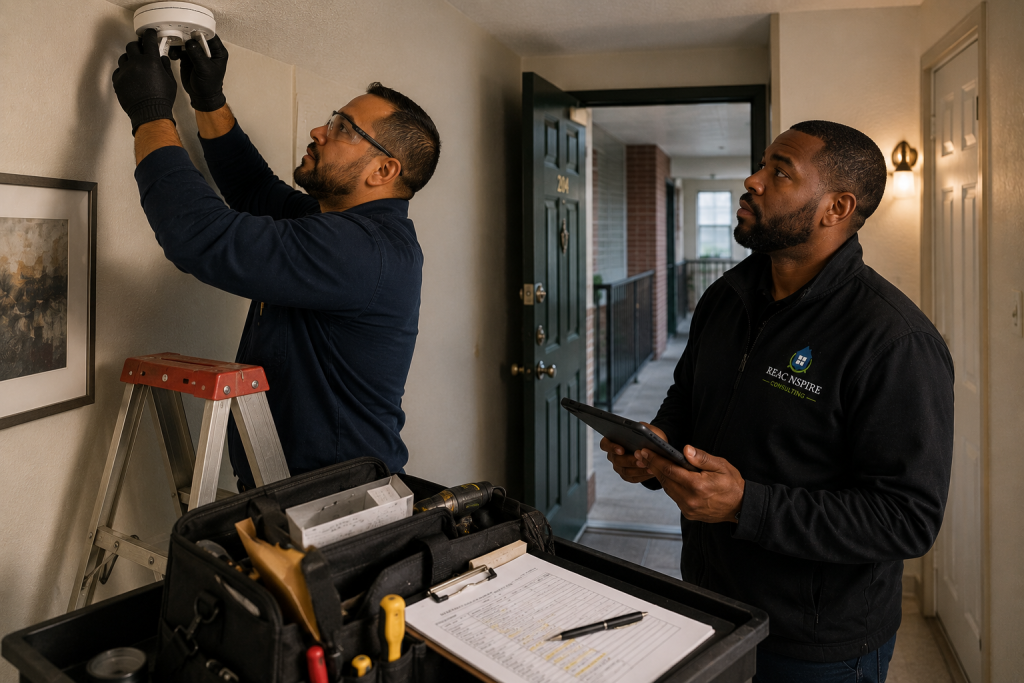
How We Prioritize a Deficiency List When the Inspection Window Is Already Open
A scored, sequenced list your team can execute — not a document to interpret.
Every finding in the report is ranked by HUD deficiency severity, so your team knows exactly where to start the morning after delivery.
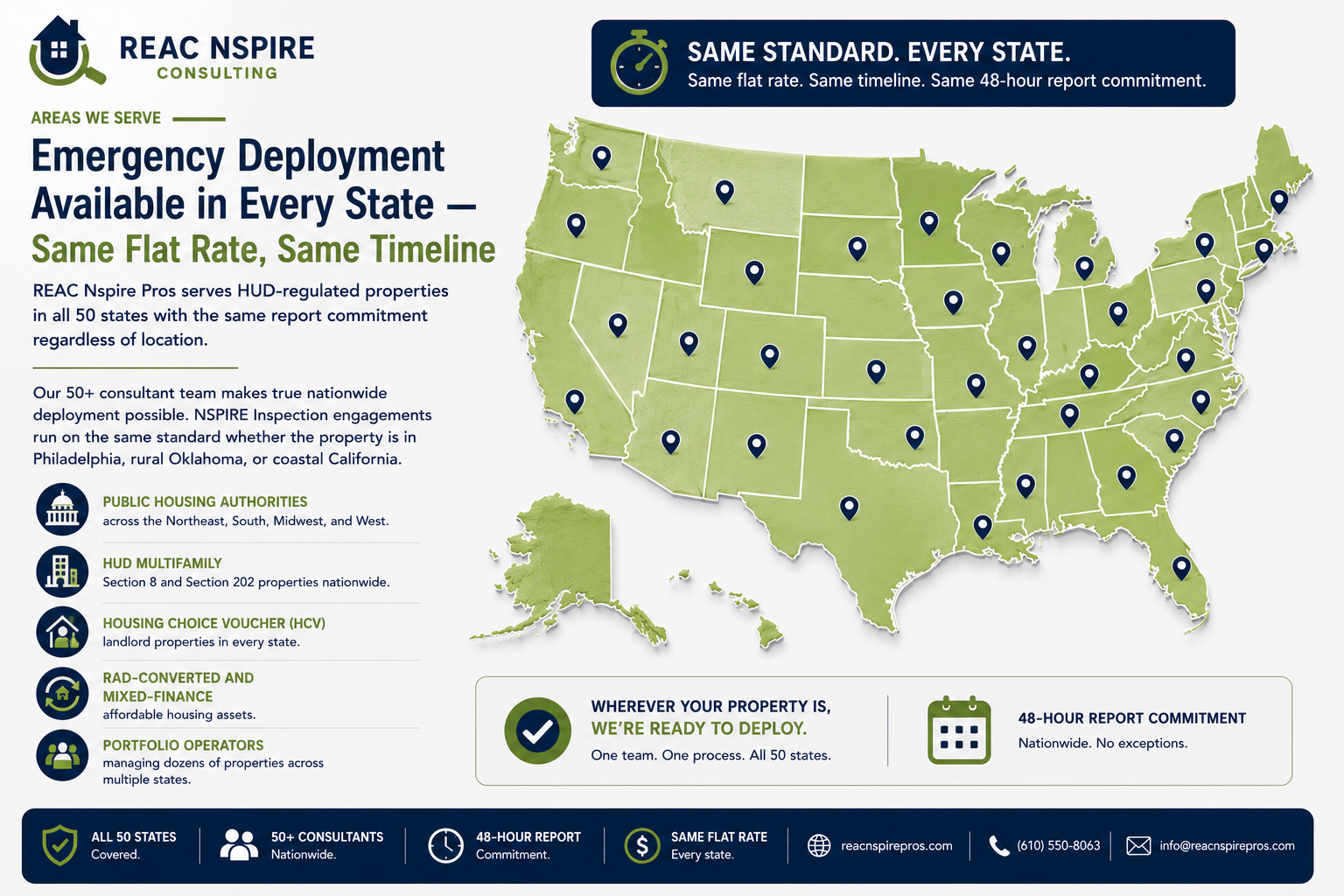
Emergency Deployment Available in Every State — Same Flat Rate, Same Timeline
REAC Nspire Pros serves HUD-regulated properties in all 50 states with the same 48-hour report commitment regardless of location.
Our 50+ consultant team makes true nationwide deployment possible. When multiple properties face overlapping inspection windows, we dispatch consultants simultaneously — no scheduling bottlenecks, no regional waitlists.
Properties we serve span the full range of HUD-assisted housing:
Flat-rate pricing applies to emergency engagements in every state. No travel surcharges. No per-unit fees. One rate covers mobilization, the on-site assessment, the written report, and follow-up support.
- Public Housing Authorities across the Northeast, South, Midwest, and West
- HUD Multifamily Section 8 and Section 202 properties nationwide
- Housing Choice Voucher (HCV) landlord properties in every state
- RAD-converted and mixed-finance affordable housing assets
- Portfolio operators managing dozens of properties across multiple states
Common questions, direct answers.
If your question isn’t here, call (610)-200-2836 and a consultant will respond directly.
Flat-rate pricing applies to every emergency engagement, regardless of property location or state. No distance surcharges, no per-unit fees, and no variable charges based on how many deficiencies are found. Contact REAC Nspire Pros at (610)-200-2836 for a project quote specific to your property type and unit count.
The 48-hour report delivery window starts after the on-site assessment is completed. Scheduling the assessment happens first – often the next business day after your call. Northeast and Mid-Atlantic properties can frequently receive same-day mobilization. Report delivery follows within 48 hours of the completed walkthrough.
Five days is still a workable remediation window when the deficiency list is ranked by score impact. Properties have passed after receiving a report with three to four days remaining. The key is starting the highest-weighted repairs immediately after delivery – not working through findings in random order.
Every finding is ranked by NSPIRE deficiency severity before it reaches you. Exigent Health and Safety items appear first, followed by Major, Moderate, and Minor findings in order. Your maintenance team doesn’t interpret severity levels – the sequence is built into the report so day one repairs address the highest-scoring deficiencies automatically.
Photographic documentation of every finding is included. Each photo corresponds directly to the written deficiency entry. Your maintenance crew sees exactly what the inspector will see – no ambiguity about where the condition is located or what “resolved” looks like.
Yes. Follow-up support continues through your inspection date. If a finding needs clarification, the team responds. If vendor coordination arises, guidance on work order documentation is provided – creating an auditable remediation record for the inspection.
Contact, Mobilize, Assess, Report — The 48-Hour Sequence Explained
Tell us your property type, state, and inspection window. We’ll confirm scheduling and next steps within one business day.