
Post-Failed HUD Inspection Recovery Consulting
Sticky Footer: Score below 60? Start your HUD recovery response today – (610)-200-2836
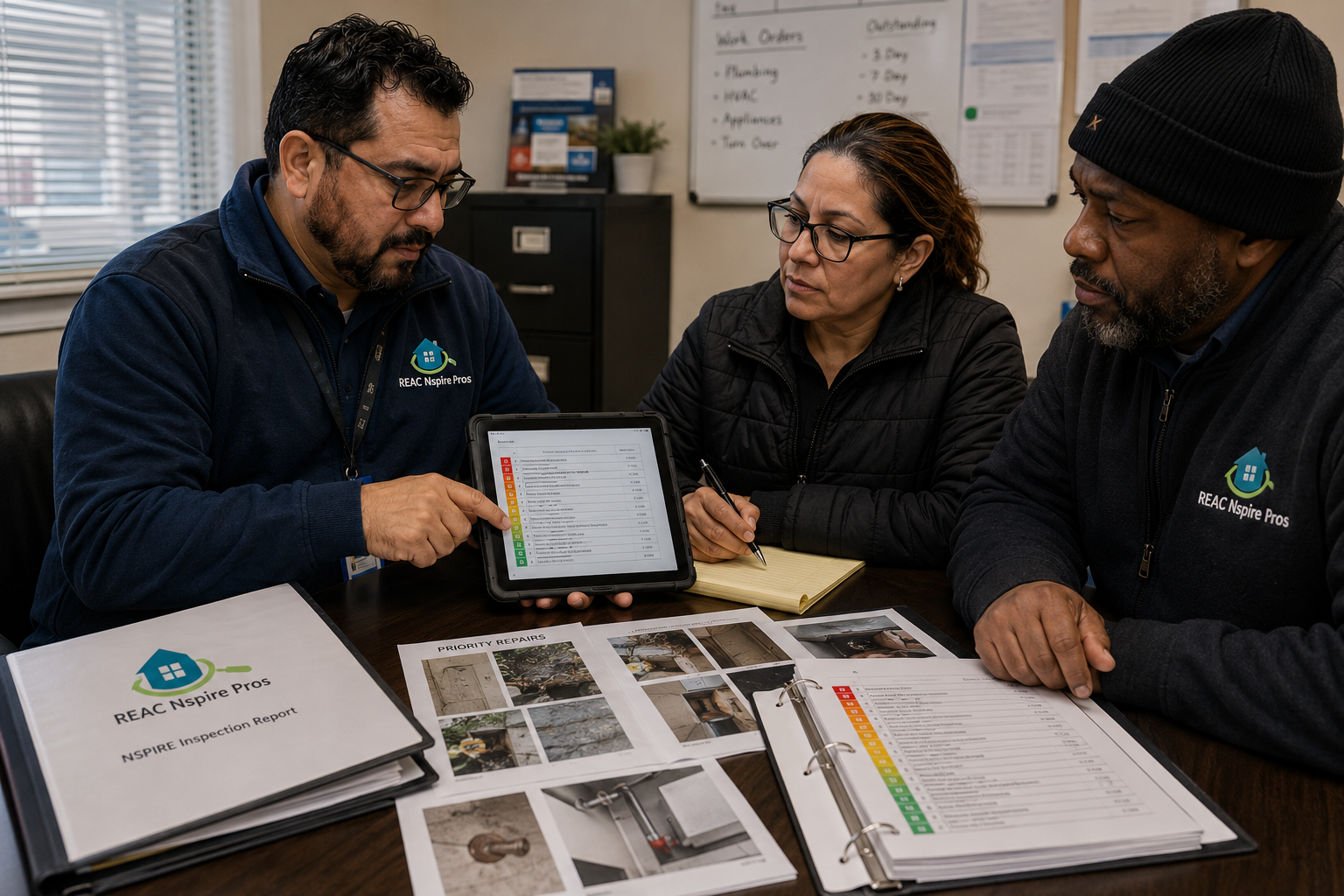
What Happens the Moment a Sub-60 HUD Score Gets Assigned to Your Property
A sub-60 HUD score triggers a specific federal enforcement sequence. It starts immediately.
Your property just received a troubled designation — HUD’s classification for any property scoring below 60 on a physical inspection. That label carries consequences beyond the score itself.
HUD now requires a formal corrective response. A follow-up inspection gets scheduled faster than the standard cycle. Ownership reporting obligations begin. Every day between the score release and your first submission counts.
The corrective action timeline is HUD’s required schedule for completing and documenting repairs after a failed inspection. It is not a general deadline. Specific deficiency severity levels carry specific correction windows. A life-threatening finding has a different required response time than a moderate one. Missing a severity-specific window is treated as non-compliance even when other repairs are complete.
The troubled designation itself isn’t the worst-case outcome. HAP contract abatement risk — the possibility that HUD suspends or cancels Housing Assistance Payment funding for properties scoring below 30, or for those that fail to respond adequately — is the most severe financial consequence available. Most properties facing a sub-60 score are not yet at that threshold. A disorganized corrective response can move them closer.
REAC Nspire Pros builds the recovery response that keeps that from happening.
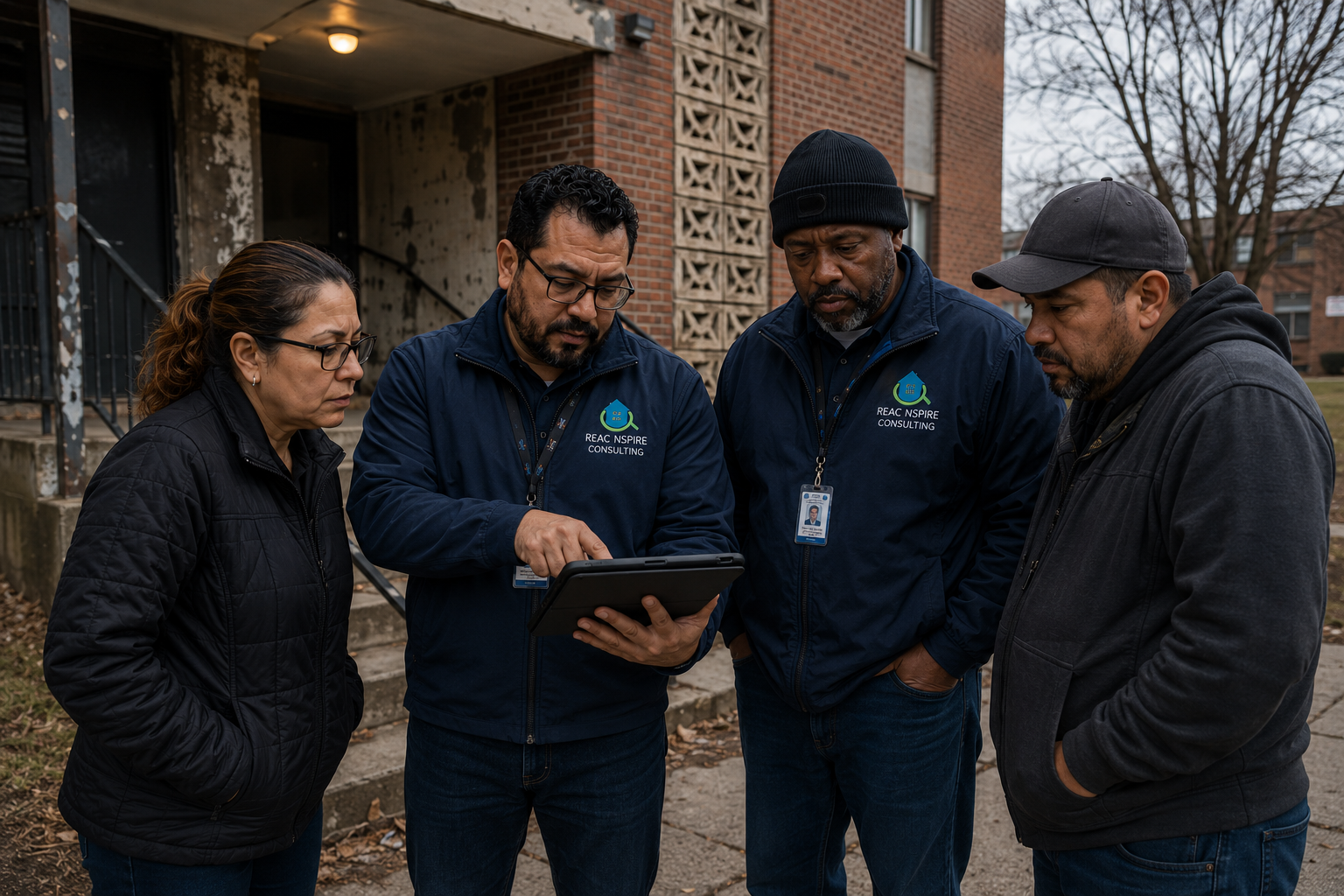
Recovery Consulting Delivered Across Mid-Atlantic Markets and All States Nationwide
REAC Nspire Pros dispatches from Philadelphia and has navigated HUD’s enforcement cycle across every program type.
The Northeast and Mid-Atlantic corridor carries one of the highest concentrations of HUD-assisted housing in the country. Older building stock. Dense urban portfolios. Housing authorities in New Jersey — including Freehold Housing Authority and Trenton Housing Authority, both active REAC Nspire Pros clients — operate under direct HUD oversight where a troubled designation carries public accountability pressure that goes beyond standard enforcement.
We have worked through this specific enforcement sequence in that environment. We know how HUD’s regional offices process corrective submissions. We know the documentation format HUD expects. That field familiarity travels with our 50+ consultant team to any state where a property needs a recovery response.
Flat-rate pricing applies regardless of location. No travel surcharge. No separate documentation fee.
- New Jersey & Pennsylvania
- New York & Mid-Atlantic
- Southeast & Sun Belt
- All other states via our network
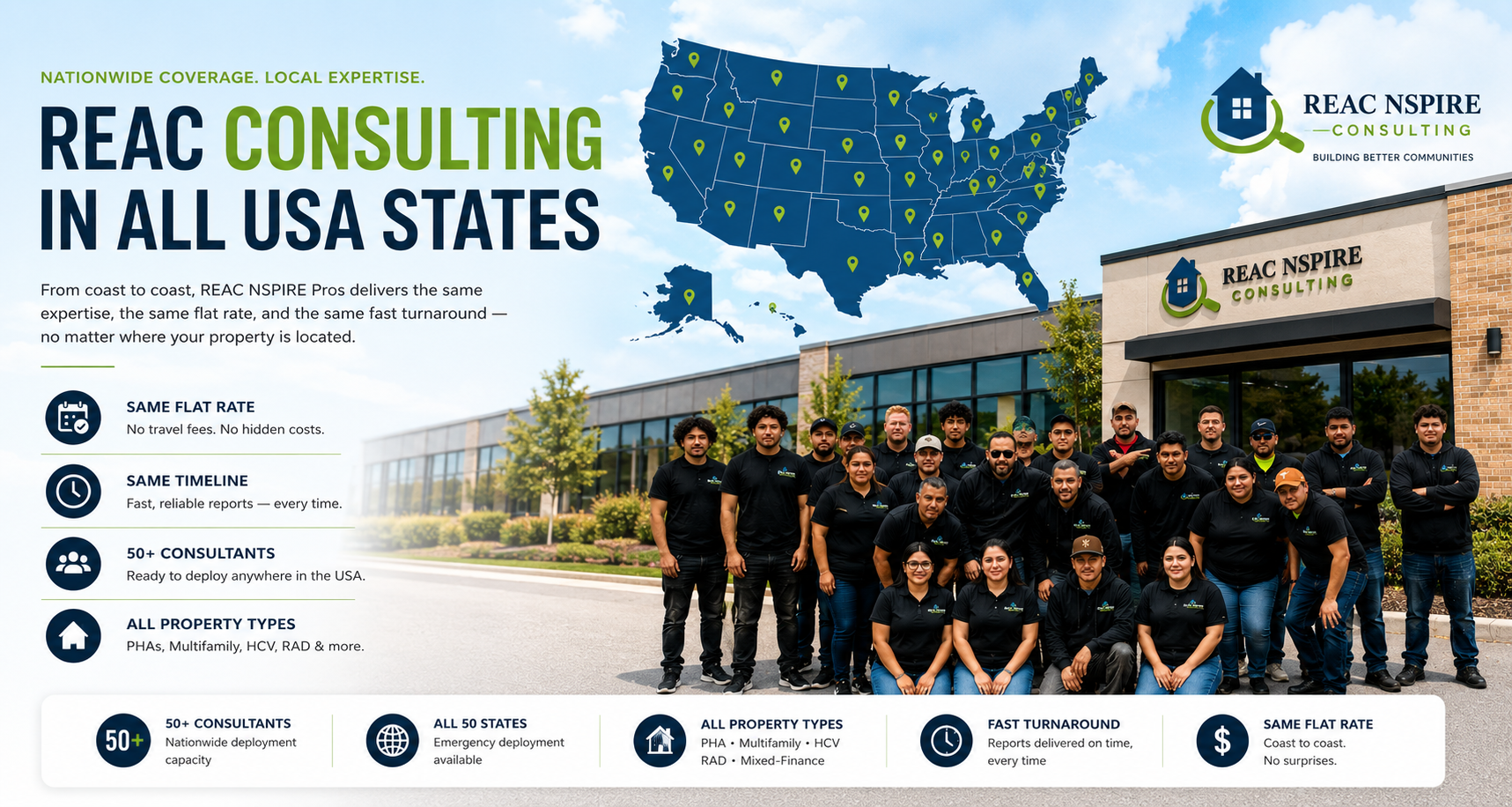
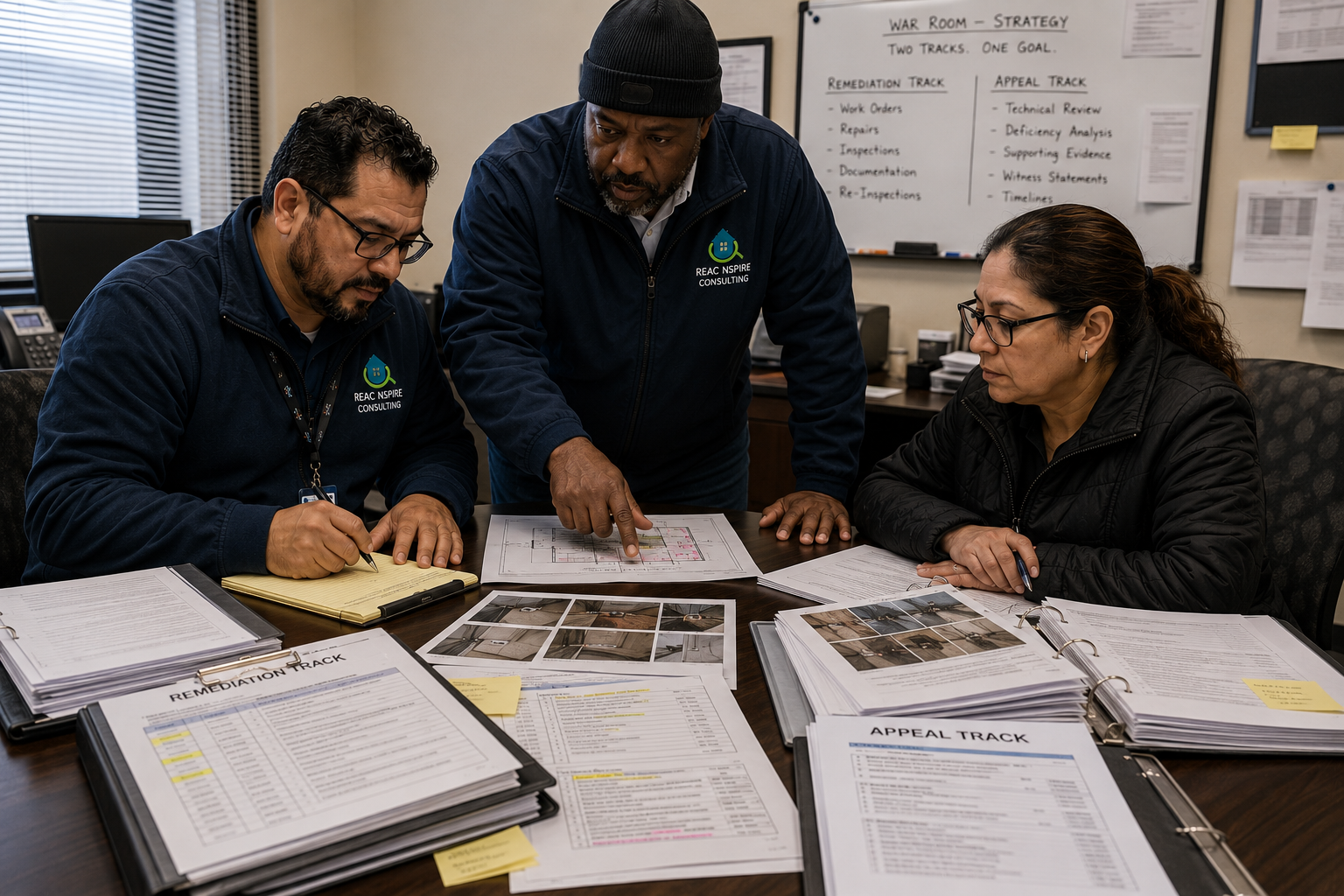
Two Tracks, Two Deadlines — How Remediation and Appeal Run at the Same Time
The properties that recover fastest run remediation and appeal in parallel — not one after the other.
I’m Sam Amoyelle, founder of REAC Nspire Pros. I’ve been working HUD inspection engagements since 2000 — through every version of the standards, including the REAC rollout and the current NSPIRE transition.
Here’s what I see repeatedly when a property team handles recovery without coordinating both tracks. Repairs start — the right instinct. But the window for filing a score appeal — the formal HUD process for challenging specific findings in an inspection score — runs at the same time. By the time repairs are documented and the team looks at the inspection record again, the appeal window has closed.
Some findings in a failed inspection record deserve to be challenged. Not every deficiency classification is correct. An inspector may have scored a condition at a higher severity level than the physical evidence supports. A unit access issue may have been documented incorrectly. A finding may reflect a condition that was already remediated before the inspection date.
Those disputable findings — left unchallenged — remain in the official score. The corrective action plan, the formal written response documenting how deficiencies will be resolved, addresses what is real. The score appeal addresses what may have been scored incorrectly.
Running both tracks in parallel, with coordinated deadlines, is how a recovery response does the most work for the property.
That is the model REAC Nspire Pros uses. One engagement. Both tracks. Neither deadline missed.
I Manage Both the Corrective Response and the Appeal — So Neither Gets Behind
One engagement covers both tracks. You won’t be managing two separate timelines with two separate consultants.
Property teams working through this process for the first time often underestimate the documentation load. The corrective action plan requires more than a list of completed repairs. HUD expects a specific format: deficiency-level narrative, work order references, timestamped photographs, contractor certifications where applicable.
That package — the evidence portfolio — is the documentation submitted alongside the corrective response. It includes everything HUD needs to verify that each finding was addressed at the right severity level on the right timeline.
A corrective response without a properly assembled evidence portfolio can be returned as non-compliant even when every repair was completed correctly and on time. The work happened. The submission did not meet the documentation standard.
We build the submission to meet the standard. The evidence portfolio is ready when the corrective action plan is ready — not after.

How the Recovery Package Combines Triage, Remediation Sequencing, and Evidence Documentation
Every recovery engagement starts with a deficiency triage ranked by score impact and enforcement priority.
Here is how we build the full recovery response:
Scored Deficiency Triage: Every finding in the inspection record gets ranked by severity level and point weight. Life-threatening findings first. Severe findings second. Moderate and low findings are sequenced by repair resource required — not by convenience or visibility.
HUD-Formatted Corrective Action Plan: The written remediation plan is built to HUD’s reporting standards. Deficiency-specific timelines. Responsible party designations. Completion certification fields. A document HUD can review and accept — not an internal work order list.
Evidence Portfolio Development: Timestamped photographs. Work order documentation. Contractor completion certifications. A written deficiency-level narrative tied to each finding being addressed or disputed. Built concurrently with the corrective plan so both are ready to submit together.
Score Appeal Package (Where Applicable): Where the inspection record contains classification errors or findings remediated before the inspection date, the appeal is prepared simultaneously. Appeal documentation uses NSPIRE’s deficiency language and is formatted to HUD’s Technical Review submission standards.
The recovery plan is not finished when repairs are complete. It is finished when HUD has everything needed to close the finding.
Start the Recovery Sequence — From Score Review to HUD-Ready Submission
The recovery engagement runs in a specific sequence. Every step has a purpose.
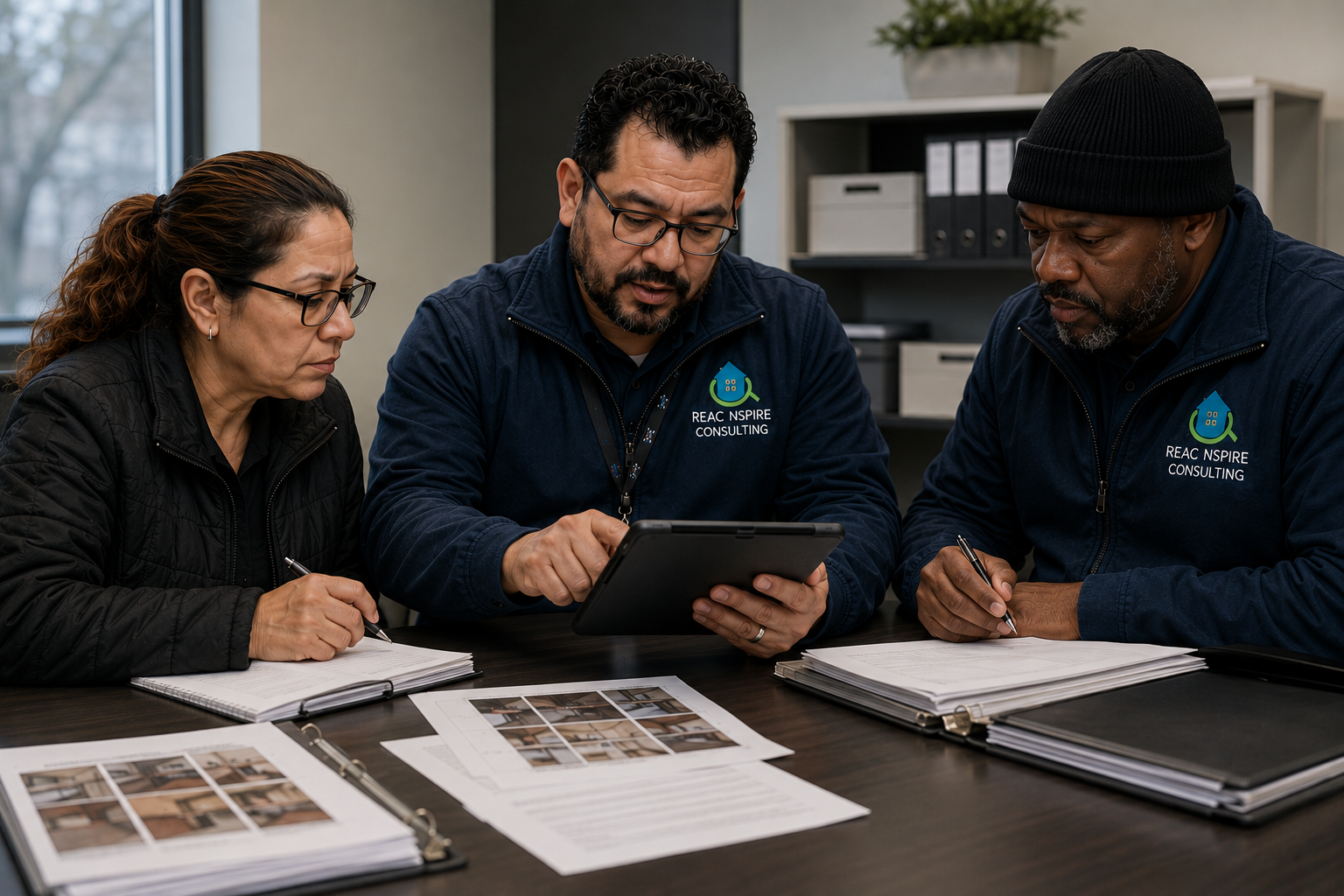
Initial Score Review
Within the first 24 hours after the score is received, we review the full inspection record. Every finding is assessed for its severity classification, its accuracy, and whether it falls within any disputable category. This review determines both the triage sequence and appeal eligibility.
Deficiency Triage and Remediation Planning
The scored triage is built immediately after the initial review. Life-threatening and severe findings generate Day 1 action items for the maintenance team. The corrective action plan draft begins simultaneously so the written response keeps pace with the physical repairs.
Concurrent Appeal Preparation
Where the inspection record contains appealable findings, the appeal package is built in parallel — not after the corrective action plan is submitted. Both tracks move on the same calendar. Appeal documentation references specific deficiency observation records from the inspection report and is supported by pre-existing photographic evidence where available.
Evidence Portfolio and Submission
As repairs are completed, the evidence portfolio is built in real time — timestamped documentation assembled as each deficiency closes, not compiled retroactively. The final submission package combines the completed corrective action plan, the evidence portfolio, and the concurrent appeal filing into a single coordinated response to HUD.
Reinspection Preparation
After the corrective submission, the accelerated reinspection — scheduled sooner than the standard cycle because of the troubled designation — requires a second walkthrough confirming that all documented repairs hold. We conduct that confirmation walkthrough before HUD’s reinspector arrives.
Post-Failed Inspection Recovery Support Available for HUD Properties in All 50 States
REAC Nspire Pros serves every state. One flat rate. Same recovery package everywhere.
We serve HUD-regulated properties across the full United States from our Philadelphia dispatch hub. Named clients include:
Recovery consulting is available for every program type: public housing, HUD Multifamily, Section 8 project-based, RAD-converted, and Housing Choice Voucher properties.
- Bonner Carrington
- Lynd Management
- EMET Realty
- Stonemark Inc.
- Tryko Partners
- Freehold Housing Authority
- Trenton Housing Authority
- And many additional housing authorities nationwide
What our work looks like.
From on-site assessment through written report delivery — every engagement runs on the same documented standard.
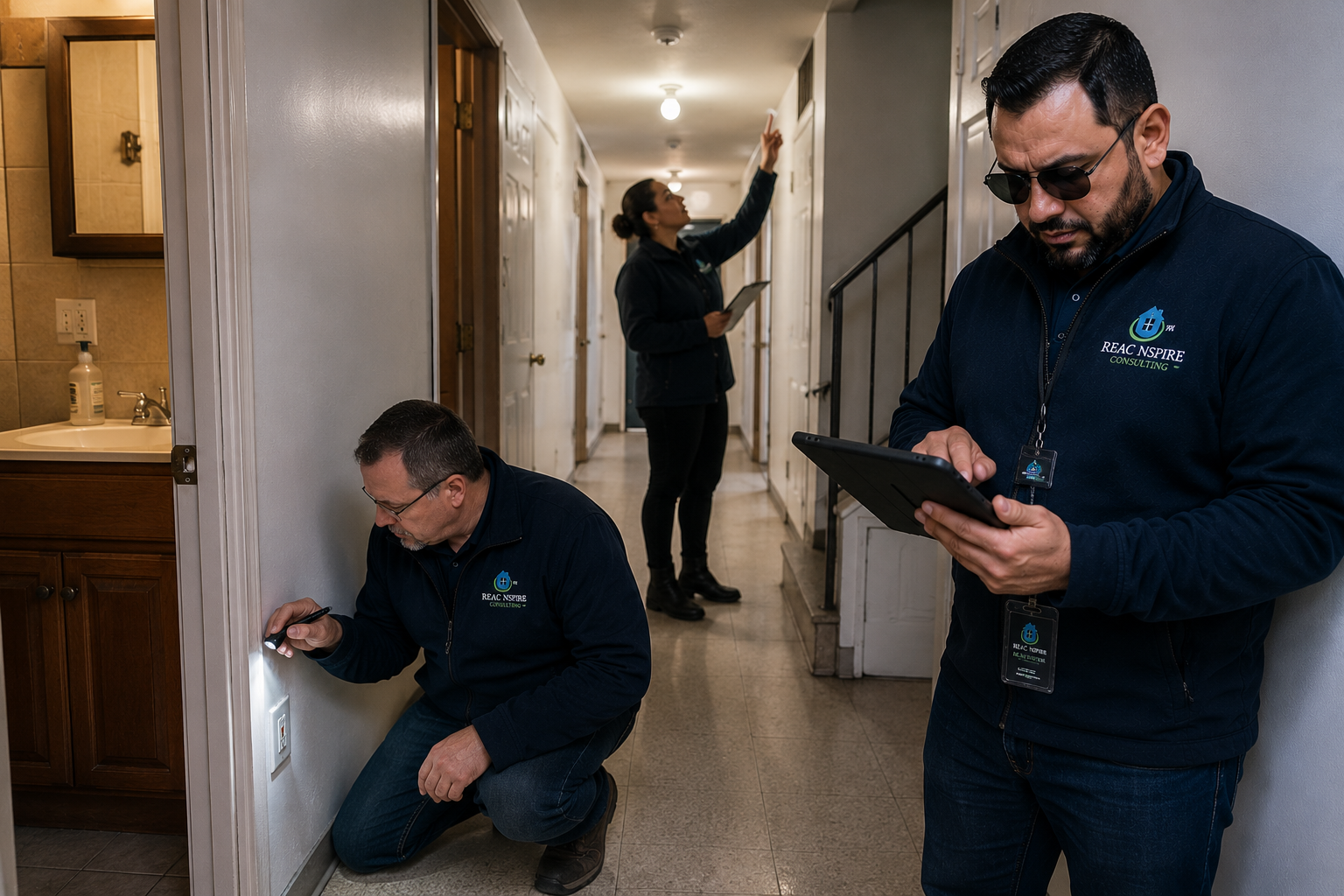
On-Site Walkthrough
Every inspectable area covered using HUD’s NSPIRE deficiency protocol — same lens your inspector applies.
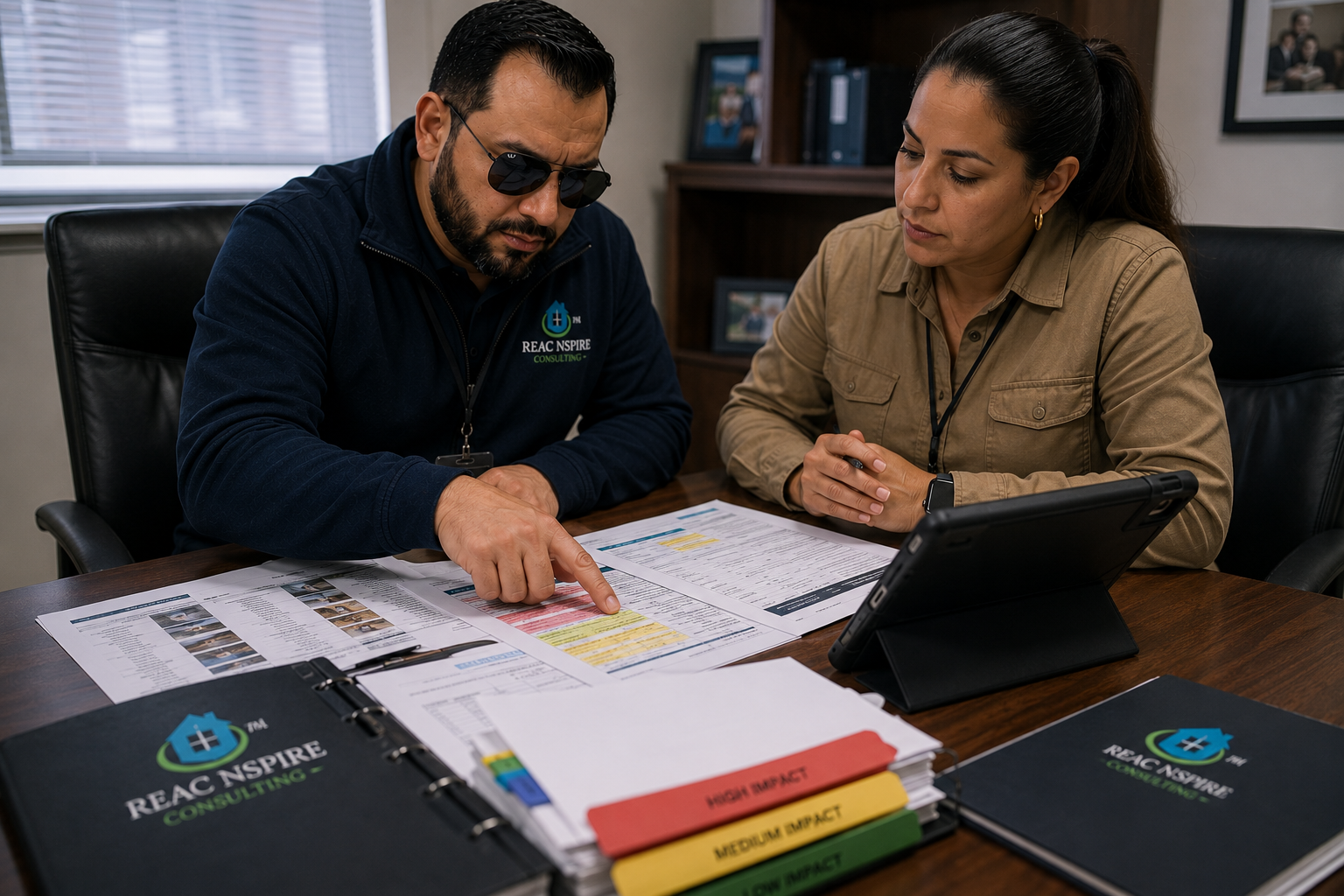
Scored Report
Findings ranked by score impact. Your team sees what carries the most points before day one.
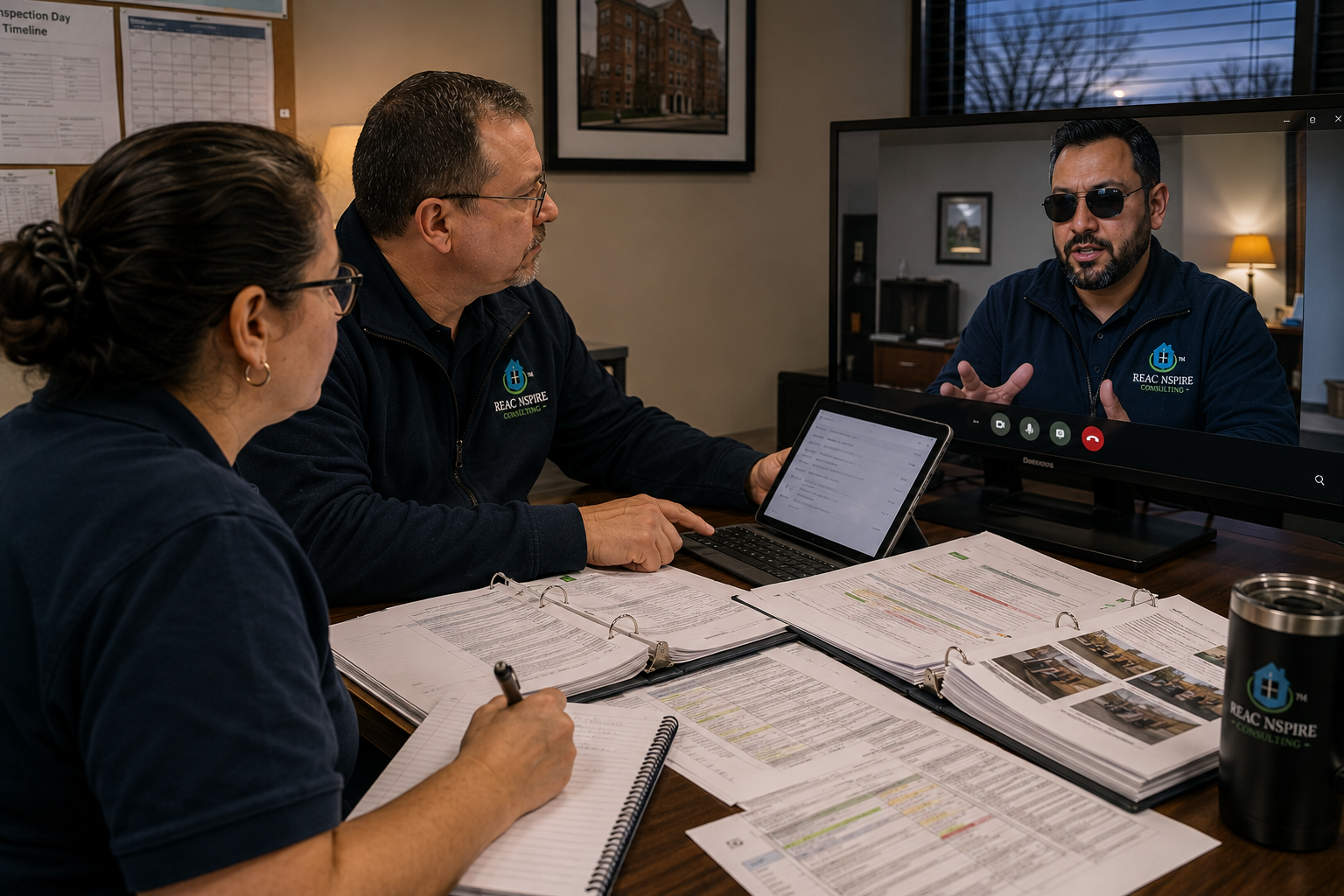
Follow-Up Support
Engagement continues through your inspection date. Questions answered. Documentation guided.
The Clock Starts When the Score Does — Contact Us to Begin the Recovery Response Today
Tell us your property type, state, and inspection window. We’ll confirm scheduling and next steps within one business day.